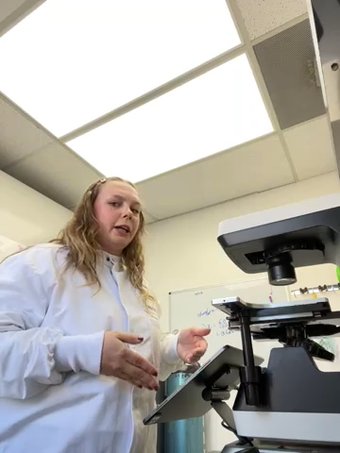
Raof Alqrache
I’m a PhD student studying gastric cancer, and the ECHO microscope has made imaging so much easier and faster. The image quality is excellent, and the system is very user-friendly. I’d definitely recommend it to any lab looking for reliable and innovative imaging.
Nov 4, 2025
Mauricio Jacobo
I’m a graduate student studying micronuclei formation and mitotic spindle abnormalities in response to drug and gene perturbation. The echo revolution has expedited the time it takes to visualize slides and facilitated switching between different objectives. I would highly recommend this to other researchers
Nov 7, 2025
Supriya D Mahajan

I am the PI who bought the ECHO Discover. It is easy to use and used almost daily by my Research team. ease of use is the favorite part. Although Storage of data images on the ipad slows down the ECHO. Yes, I would recommend it to colleagues. I like the Z stack feature in the ECHO, although those feature are more difficult to obtained as compared to the Keyence BZ-X1000 microscope
Nov 10, 2025
Natalie Walton
Overall, the ECHO Revolve has been a nice addition to our lab. The fluorescence capabilities, as well as the ability to invert the scope, have been great to have all in one unit, since our space is limited. The iPad screen also makes it so much easier to share with others what you are actively seeing without having to play musical chairs in front of the microscope. A few reasons why we didn't give this scope five stars, though. You cannot do maintenance on the scope yourself; you have to call them. There is a screen that only they can access, making you unable to have full independence from maintenance and cleaning. So, you cannot check phase alignment, for example, yourself. Also, we've encountered a few bugs in the general performance of the microscope. However, most of those bugs have been fixed or addressed by reaching out to the team. The final downside is that the storage space on the iPad is limited to the version that it came with. Since the microscope uses the iPad camera, the dock is set up only for that iPad version, meaning that as newer versions are available on the market, you are stuck with whatever version you have. Ultimately, there are a few bumps with this scope, but that will happen with a lot of newer technologies. For us, the ability to automatically have scale bars and the smart nose piece, as well as the ease of use, makes this scope worth it to us.
Nov 10, 2025
Isaac Sundar


I am a faculty member conducting pulmonary research to understand the mechanisms that drive the pathobiology of chronic lung diseases such as asthma and pulmonary fibrosis. We routinely use the ECHO Rebel microscope to examine cultured cells and tissue sections stained with H&E and other histopathological methods to assess inflammation and fibrosis. We greatly appreciate the ease of use and reliability of this microscope for our routine research applications. I highly recommend this basic model for standard use; however, the higher-end versions offer additional versatility for applications such as multi-color immunostaining and fluorescence microscopy. The microscope’s compact, sleek design and intuitive interface make it an excellent choice for daily use in our laboratory.
Nov 10, 2025
Tanja
I work in tissue engineering as a PhD student and so far I enjoyed working with ECHO as it enabled me a quick magnified look into my experiments and helped me with qualitative assesment of immunostained samples, where the quality of images is indeed satisfactory. My favourite part about the system is that it also enables automated imaging, which has proven to save me a lot of time when I had to image my samples every day in the course of one week - which saves a lot of time! That´s one of the main reasons why I would recommend it to other users as it is an easy-to-use benchtop microscope that provides researchers with good-quality images.
Nov 17, 2025
Reen McCarthy

I am the contract lab manager of the Medical Geology Lab at NASA JSC. We are investigating physical and toxicological damage to the human lung post-inhalation of simulated astromaterials. At the moment, we are looking at anorthosite particles less than 1um that have been added to 3D cultures of primary human lung cells. I LOVE my Echo Revolve and so do my co-workers! The optics are so clear, the platform is so versatile, the user interface is so friendly. I've been at the bench almost 35 yrs and have never had a microscope so capable.
Nov 19, 2025
Nitin Khandelwal
I am a neuroscientist studying the development and function of specific neuronal subtypes in the mouse brain, as well as brain development across different mammalian species. My work also involves imaging iPSC-derived neurons from multiple species, which requires a highly efficient and versatile microscopy system. The ECHO microscope has significantly streamlined our imaging workflow. It is extremely easy to use, turns on quickly, and allows rapid acquisition of high-quality images without complicated setup. The image clarity is excellent, and transferring files to external storage is simple. Its multifunctional capabilities make it ideal for imaging live cells, fixed cells, and tissue sections, and it has been particularly valuable for quantifying cell populations and validating molecular findings from our genomic studies. One of my favorite aspects of the system is the fully digital interface and compact design. The touchscreen controls make imaging remarkably fast and intuitive, even for multi-channel experiments, and the small footprint saves valuable bench space. I would absolutely recommend ECHO microscopes to other researchers—they offer high-quality imaging with a modern, user-friendly experience, are easy for new users to learn, and do not require a large budget compared to traditional systems. What truly sets the ECHO system apart is its all-in-one digital workflow, seamless operation, and the speed at which high-quality data can be generated. Unlike conventional microscopes that demand extensive manual adjustments, the ECHO platform provides a streamlined, efficient solution suitable for both routine imaging and advanced research applications.
Nov 21, 2025
Han
I am a PhD student at UW-Madison doing cancer research. I have been using ECHO for more than 4 years (since I joined the lab!), taking hundreds of pictures. The best thing about ECHO is its ability to take and process images, as I can measure cell sizes and add labels. I would 100% recommend ECHO to other researchers, and, to be honest, collaborators have been borrowing it because it is easy to capture and export images for cell culture. I am very happy and satisfied with having ECHO in my lab.
Nov 24, 2025
Diomedes Trejos
Who are you / what are you researching? My name is Diomedes Trejos, and I am a PhD student at the University of Miami. My research focuses on understanding the mechanisms driving blood cancers, particularly pediatric leukemias, using advanced stem cell models and multi-omics approaches. How has our microscope helped your research? The ECHO microscope has been a crucial tool in our work. We perform extensive microscopy to monitor stem cell differentiation and leukemia biology, and the system consistently delivers clean, sharp, and publication-quality images. It has streamlined our imaging workflow and improved the clarity and reliability of our cellular observations. What is your favorite part about the system? The combination of exceptional image quality and user-friendly design is my favorite part. The interface is intuitive, making it incredibly easy for students and researchers at all levels to use without a steep learning curve. Would you recommend ECHO microscopes to other researchers? Why? Absolutely — and we already have. We recommended ECHO to other labs at our institution, and they have adopted the system as well. The microscopes offer excellent imaging performance, are easy to learn and operate, and fit seamlessly into diverse experimental workflows. What stands out about our microscope versus other systems? ECHO stands out for its simplicity, versatility, and impressive image quality in a compact system. Compared to other microscopes, it offers a smoother user experience and faster setup without sacrificing performance, which has been a game-changer in our lab’s day-to-day work.
Nov 4, 2025
Sampurna
Hi I am Sampurna a postdoctoral researcher in te Neurology Department at Northwestern University. We in our lab have this microscope installed inside the hood and it is being used regularly for iPS culturing for last three years. The system is very easy to use and hassle free. It has now become the most essential part of iPS culture room. I would definitely recommend it to other users as it is not only userfriendly but also cost effective. Its compact size and its display makes it stand out from the rest in the market.
Nov 4, 2025
Jonas Nance
We purchased a couple Echo Rebels a few years back. They have helped us establish numerous cell lines here at the Pediatric Cancer Research Center at TTUHSC. Our technicians love them, and hey are perfect for viewing live cell culture in flasks. Their ease of use and great pictures have won us over. -jonas
Nov 4, 2025
Will RC Charlton
Echo makes it so easy to use. Never having to take our glasses off to look at images, buy camera equipment to fit into the slot, its all there built in with modern tech. We love its easy to use functions and its capabilities.
Nov 2, 2025
Arun Ganesan
We are an epigenetics lab at the UNM Health Sciences Campus. Our lab has been using the Echo Revolve microscope regularly, and it has truly transformed how we approach cell imaging and transfection experiments. The system is incredibly user-friendly—especially the software interface, which operates seamlessly with an iPad. This makes it easy for anyone in the lab to capture and analyze images without a steep learning curve. The Revolve feature is particularly valuable for our workflow. Whether we're preparing slides or working with multi-well plates, the flexibility and efficiency it offers are unmatched. We routinely use it to monitor GFP and RFP transfections, and the clarity and reliability of the imaging have been excellent. Overall, Echo Revolve has become an essential tool in our lab, and we highly recommend it to any research group looking for a powerful yet easy-to-use microscopy solution.
Oct 31, 2025
Andrew Joseph Modzelewski
My name is Andrew Modzelewski, and I’m an Assistant Professor at the University of Pennsylvania. In my lab, we explore how transposable elements, often referred to as jumping genes, affect gene regulation during the earliest stages of mammalian development. Given that we frequently manipulate embryos, the ability to visualize tiny and rare samples like zygotes and oocytes is crucial for our research. The ECHO Revolve has quickly become one of our most essential instruments, both in the main lab and the tissue culture lab. Its ease of switching between brightfield and fluorescence imaging is invaluable, as we rely heavily on both techniques. The hybrid upright/inverted design not only simplifies our workflow but also helps us save precious space. Since our team primarily uses Mac hardware, transferring and storing data is a seamless process. The Revolve has gained popularity on our floor; many neighboring labs prefer to use it, and two have even installed their own units. It’s clear that the Revolve was designed by individuals who truly understand the daily needs of microscope users. Overall, it’s an exceptionally intelligent instrument.
Oct 31, 2025
Pearl Louie
I am lab technician in Dr. Amanda Brown's lab at Johns Hopkins. Currently, I am researching the effects of HIV and OPN/SPP1 on the cerebrovascular system. The ECHO microscope has been instrumental in helping me visualize my stained brain tissue with remarkable clarity. One of my favorite features is the points and tile mode, which allows me to effortlessly capture areas of interest. I wholeheartedly recommend ECHO microscopes to fellow researchers. They are user-friendly and enable swift imaging. What truly sets the ECHO microscope apart is its dual functionality, offering both upright and inverted modes in a single device, making it an ideal choice for our compact lab space.
Oct 30, 2025
Chun Liu
I have been using ECHO starting day one when they released their first model. The ECHO REVOLVE microscope has been a key instrument for our daily stem cell culture workflow. Its flexibility allows us to rapidly switch between brightfield and fluorescence imaging during live iPSC differentiation monitoring, CRISPR editing validation, and functional assays. I appreciate the hybrid upright/inverted design and the intuitive software interface. Mostly importantly, the iPad design for touch control and seamless focus is super helpful for trainee without any experience. We have purchased and recommended to many other labs, still happy to do so in future.
Oct 28, 2025
Tianhao Duan
Hi, my name is Tianhao Duan, and my research focuses on CAR T and TCR T cell–based cancer immunotherapy. We utilize the ECHO microscope for live-cell imaging, particularly to monitor the real-time killing of tumor cells by T cells during cytotoxicity assays. It’s been a great tool for visualizing dynamic interactions between immune and cancer cells. My favorite part about the ECHO system is how intuitive and easy to use it is — switching between brightfield and fluorescence is seamless, and the image quality is excellent. I would definitely recommend ECHO microscopes to other researchers. They offer great imaging performance at a much more affordable price compared to other systems like the Incucyte. What really stands out to me is the user-friendly interface, compact design, and cost-effectiveness. Although it can sometimes have a little trouble focusing when imaging a large number of suspension cells at once, overall it’s an excellent, practical choice for labs doing live-cell imaging in immunotherapy research.
Oct 28, 2025
Daphne
I'm a graduate student doing research on breast cancer metastasis. The ECHO revolution microscope has been super helpful to do full section scans of H&E stained lungs which I need to quantify metastatic burden. I've used several slide scanning microscopes before and what really stands out to me about the ECHO is the speed at which it does brightfield scanning. I can scan a large section of 5 lobes within a matter of ~2 mins. I've also used the ECHO revolve for tissue culture and also find it incredibly user friendly. I love being able to airdrop the photos I just took from the microscope to my phone or my iPad. It makes getting my data super easy!
Oct 27, 2025
Camden Holm
I am a graduate student in biomedical engineering doing cardiovascular research. Our Echo Rebel has been an invaluable tool for training students in our lab, as the iPad-connected format makes teaching cell culture much easier. Additionally, the ability to use the microscope in inverted and upright format, as well as inside biosafety cabinets provides many more use-cases than a standard microscope and has served to create new research opportunities.
Oct 24, 2025
Dong Hu
I am a research scientist primarily focused on immuno-oncology research. The ECHO microscope allows us to efficiently image both cultured cells and stained slides. What I appreciate most about this system is its exceptional user-friendliness and high image resolution. I would highly recommend ECHO microscopes to other researchers for their intuitive interface and superior image quality. We have also used or tested other systems, including the EVOS and Lionheart microscopes. What sets the ECHO microscope apart is its ease of use and outstanding image clarity.
Oct 24, 2025
Madison Sikorski
I am a graduate student at the Ohio State University and my research revolves around B cell responses in pancreatic cancer. This work involves a lot of multiplex immunofluorescence and general histology. I love being able to monitor my staining throughout the process to ensure each step has worked to my liking. My favorite part about the system is how easy it is to use. I would recommend this microscope to other researches as it works sufficiently for brightfield and some fluorescence needs, and also the support provided by echo to this system has been satisfactory.
Oct 21, 2025
Ozlem Dilek
I am an Assistant Professor, and my research focuses on developing novel fluorescent probes for the selective labeling of proteins involved in human diseases. Using our Revolve microscope, we successfully visualized oxidative stress-induced carbonylation with our newly developed probes. The system delivers excellent image quality and performance. What I appreciate most is its user-friendly interface and the high-quality imaging capabilities. I would highly recommend this microscope to other researchers—it is intuitive, efficient, and easy to navigate.
Oct 21, 2025
Sebastian R
Hi, I'm currently researching Alzheimer's disease in iPSC derived cell types. This microscope has helped my research by visualizing the morphology changes and viability of the cells during these differentiation stages to the terminal end goal cell along with being able to see potential changes via brightfield during drug treatments. My favorite part of the system is the imager of the microscope allowing you to easily save and transfer images while labeling them with scale bars, etc. I would reccomend using ECHO microscopes because they're easy to use and technologically sound with a great support team. The biggest thing that stands out to me is that these microscopes are easy to use, image, and connect to company wifi for file transfers while before we had to manually connect USBs and perform multiple computer transfers which was a hassle. Thanks ECHO!
Oct 15, 2025
David Russell
We acquired one for our State of Maine Fish Health Lab as a replacement for a much older scope that we used for a range of tasks. The IPAD as an eye piece is really great, especially with all of its annotation capabilities and documentation features. Automatic micrometer switching between objectives and the ability to use a stylus to measure lengths and surface areas of cells very quickly at any level of zoom also makes some "old school" analytical methods practical. For example, we have used it to determine ploidy status in diploid vs triploid trout as part of an experiment. As triploids have much larger erythrocytes than diploids, the ability to quickly measure a bunch of cells on fixed giemsa stained blood smears and then export those measurements into the spreadsheet function makes assessment easy to conduct and to document. Without the annotation and micrometer features, such methodology is just too labor intensive and of a nature that makes other means of assessment more practical. It saves us time and enhances our ability to show others what we find.
Oct 14, 2025
Wayne West
My name is Wayne West and I work for Merck Animal Health. We use the Echo microscope for Mycoplasma identification and coccidiosis identification. The ease of use and the ability to use as upright and/or inverted is extremely convenient.
Oct 10, 2025
Alfonso
The Echo Revolve has made our lab’s cell culture work much easier. It’s very user-friendly, has an excellent interface, and offers outstanding versatility between inverted and upright microscopy.
Oct 8, 2025
Iliana Battaglia
Our team works primarily with transfections, and we use the Echo Revolve microscope daily to capture images of our cells. It’s an essential tool for assessing confluence, overall cell health, and morphology. We also rely on its fluorescence capabilities to monitor transfection efficiencies. By far, this microscope is the easiest and most comprehensive on the market. It’s incredibly user-friendly, and the image quality is truly exceptional. The Echo Revolve has streamlined our workflow and become an indispensable part of our lab.
Oct 8, 2025
Puspa Pandey
I’m Puspa Raj Pandey, PhD, working in cancer research and cell-therapy development. Our lab uses the ECHO Rebel microscope routinely for cell-culture monitoring and imaging of live cells, which is critical to evaluate morphology and health during research and development works. The system has been reliable and has helped streamline our imaging workflow by reducing the time and complexity of routine checks. What I appreciate most about the ECHO microscope is that it’s very easy to operate—the software is intuitive, so even new team members can start using it right away with minimal guidance. Compared with other systems we’ve tried, the ECHO Rebel microscope is user-friendly, requires no formal training, and is cost-effective. I would definitely recommend it to other researchers because it provides excellent functionality for a reasonable price while maintaining high image quality and consistent performance.
Oct 7, 2025
Vaibhav Patil
Hi everyone! I'm Vaibhav, a research assistant at the University of Mumbai, studying cell biology. The ECHO Microscope has been an absolute game-changer for us in the lab. Its high resolution and user-friendly interface have made it so much easier to analyze cell structures accurately. What I love most is how quickly we can train new students to use it effectively. I wholeheartedly recommend ECHO Microscopes to fellow researchers. The quality and ease of use make it a standout option in our field. Thanks to ECHO, our research has been more efficient and productive. Sharing this positive experience is my pleasure, and I hope it helps others in their scientific endeavors.
May 6, 2024
Zahra Kolahchi


I really like this microscope because it has been extremely helpful for my research on a brain-on-chip blood-brain barrier model for Alzheimer’s disease. The best part about this microscope is how easy it is to work with, and the price was very reasonable compared to similar microscopes. Considering the image quality you get and how user-friendly it is, the value is truly excellent. It offers useful features like Z-stacking, overlay, and singular formats, which make imaging much more versatile. You can also easily reuse the settings from a previously taken image to create comparable images, which is very convenient for consistent experiments. Overall, I would definitely recommend this microscope to others. Whether your research is in vitro, in vivo, or fluorescence-based, it’s a great option that delivers both quality and ease of use.
Oct 3, 2025
Catherine Hunter
Our group studies necrotizing enterocolitis. This is a devastating disease that effects newborn infants. We have enjoyed using the microscope to look at a range of tissues and enteroids. It has a user friendly interface and has been easy to work with. It also fits nicely in our lab space.
Nov 27, 2023
Frances Lagarda
I'm Frances, the cell culture SME within our company's core service labs. Our Echo Revolve and Rebel have been instrumental in how we streamlined processes, expanded our capabilities in the lab in terms of imaging, and all around better visualize our samples. The iPad is a major win for accessibility! I always recommend Echo microscopes to other scientists and engineers that I work with, but the systems truly speak for themselves. Anyone who uses one of our microscopes ends up wanting one for their own lab! The best feature (aside from the iPad) is the compact footprint. Our lab is tiny, but we are able to squeeze two of these systems in easily. The Echo microscopes are one of our favorite instruments in the space!
Nov 8, 2023
Kushal Kandhari
The ECHO microscope is a game-changer in terms of its optical capabilities. Its high-resolution imaging provides unparalleled clarity, allowing me to observe even the most intricate details of the specimens I study. The fact that it is hybrid and can function as both UPRIGHT and INVERTED is simply amazing. In conclusion, the ECHO microscope has exceeded all my expectations. Its exceptional image quality, user-friendly interface, adaptability, and robustness make it an indispensable tool for anyone engaged in scientific research
Oct 31, 2023
James Velez
My name is James Velez and I am a Scientist II at Emulate Inc. I run fee-for-service studies using our Organ-on-Chip platform. The ease of use and high quality resolution improved our daily imaging workflow by cutting the time it takes to image a study in half! I would highly recommend ECHO microscopes to anyone because you can get publication quality images (phase contrast or fluorescent) straight off the scope and the iPad makes it compatible to all the Macs we have in the office. Sharing and editing is a breeze compared to other platforms where you might have to convert the file type before even seeing the image. We love this platform so much, we already have 3 scopes in house and are working on getting a fourth!
Oct 30, 2023
Paige Arneson-Wissink
We study pancreatic cancer cachexia and we use cell-based models for a number of our studies. We needed a microscope that would work for daily use, but could also take publication-quality photos. We made the right choice choosing the Echo Rebel! The resolution of both the iPad display and the exported images is phenomenal, especially for the price of the system. It is easy to use and easy to train people on (our summer highschool intern was using it independently after 10 minutes). The photos are easy to export via airdrop, which means we don't have to worry about connecting it to our institution's secure network. The Echo Rebel has made photo documenting our cell culture work so much easier.
Oct 9, 2023
Michael
The ECHO is a very intuitive, user-friendly microscope that generates high quality images without the steep learning curve of traditional fluorescence microscope systems. The ability to covert between upright and inverted is really novel. The customizability of the system has made this a great addition to our tissue culture lab.
Oct 10, 2023
Raof Alqrache
I’m a PhD student studying gastric cancer, and the ECHO microscope has made imaging so much easier and faster. The image quality is excellent, and the system is very user-friendly. I’d definitely recommend it to any lab looking for reliable and innovative imaging.
Nov 4, 2025
Mauricio Jacobo
I’m a graduate student studying micronuclei formation and mitotic spindle abnormalities in response to drug and gene perturbation. The echo revolution has expedited the time it takes to visualize slides and facilitated switching between different objectives. I would highly recommend this to other researchers
Nov 7, 2025
Supriya D Mahajan

I am the PI who bought the ECHO Discover. It is easy to use and used almost daily by my Research team. ease of use is the favorite part. Although Storage of data images on the ipad slows down the ECHO. Yes, I would recommend it to colleagues. I like the Z stack feature in the ECHO, although those feature are more difficult to obtained as compared to the Keyence BZ-X1000 microscope
Nov 10, 2025
Natalie Walton
Overall, the ECHO Revolve has been a nice addition to our lab. The fluorescence capabilities, as well as the ability to invert the scope, have been great to have all in one unit, since our space is limited. The iPad screen also makes it so much easier to share with others what you are actively seeing without having to play musical chairs in front of the microscope. A few reasons why we didn't give this scope five stars, though. You cannot do maintenance on the scope yourself; you have to call them. There is a screen that only they can access, making you unable to have full independence from maintenance and cleaning. So, you cannot check phase alignment, for example, yourself. Also, we've encountered a few bugs in the general performance of the microscope. However, most of those bugs have been fixed or addressed by reaching out to the team. The final downside is that the storage space on the iPad is limited to the version that it came with. Since the microscope uses the iPad camera, the dock is set up only for that iPad version, meaning that as newer versions are available on the market, you are stuck with whatever version you have. Ultimately, there are a few bumps with this scope, but that will happen with a lot of newer technologies. For us, the ability to automatically have scale bars and the smart nose piece, as well as the ease of use, makes this scope worth it to us.
Nov 10, 2025
Isaac Sundar


I am a faculty member conducting pulmonary research to understand the mechanisms that drive the pathobiology of chronic lung diseases such as asthma and pulmonary fibrosis. We routinely use the ECHO Rebel microscope to examine cultured cells and tissue sections stained with H&E and other histopathological methods to assess inflammation and fibrosis. We greatly appreciate the ease of use and reliability of this microscope for our routine research applications. I highly recommend this basic model for standard use; however, the higher-end versions offer additional versatility for applications such as multi-color immunostaining and fluorescence microscopy. The microscope’s compact, sleek design and intuitive interface make it an excellent choice for daily use in our laboratory.
Nov 10, 2025
Tanja
I work in tissue engineering as a PhD student and so far I enjoyed working with ECHO as it enabled me a quick magnified look into my experiments and helped me with qualitative assesment of immunostained samples, where the quality of images is indeed satisfactory. My favourite part about the system is that it also enables automated imaging, which has proven to save me a lot of time when I had to image my samples every day in the course of one week - which saves a lot of time! That´s one of the main reasons why I would recommend it to other users as it is an easy-to-use benchtop microscope that provides researchers with good-quality images.
Nov 17, 2025
Reen McCarthy

I am the contract lab manager of the Medical Geology Lab at NASA JSC. We are investigating physical and toxicological damage to the human lung post-inhalation of simulated astromaterials. At the moment, we are looking at anorthosite particles less than 1um that have been added to 3D cultures of primary human lung cells. I LOVE my Echo Revolve and so do my co-workers! The optics are so clear, the platform is so versatile, the user interface is so friendly. I've been at the bench almost 35 yrs and have never had a microscope so capable.
Nov 19, 2025
Nitin Khandelwal
I am a neuroscientist studying the development and function of specific neuronal subtypes in the mouse brain, as well as brain development across different mammalian species. My work also involves imaging iPSC-derived neurons from multiple species, which requires a highly efficient and versatile microscopy system. The ECHO microscope has significantly streamlined our imaging workflow. It is extremely easy to use, turns on quickly, and allows rapid acquisition of high-quality images without complicated setup. The image clarity is excellent, and transferring files to external storage is simple. Its multifunctional capabilities make it ideal for imaging live cells, fixed cells, and tissue sections, and it has been particularly valuable for quantifying cell populations and validating molecular findings from our genomic studies. One of my favorite aspects of the system is the fully digital interface and compact design. The touchscreen controls make imaging remarkably fast and intuitive, even for multi-channel experiments, and the small footprint saves valuable bench space. I would absolutely recommend ECHO microscopes to other researchers—they offer high-quality imaging with a modern, user-friendly experience, are easy for new users to learn, and do not require a large budget compared to traditional systems. What truly sets the ECHO system apart is its all-in-one digital workflow, seamless operation, and the speed at which high-quality data can be generated. Unlike conventional microscopes that demand extensive manual adjustments, the ECHO platform provides a streamlined, efficient solution suitable for both routine imaging and advanced research applications.
Nov 21, 2025
Han
I am a PhD student at UW-Madison doing cancer research. I have been using ECHO for more than 4 years (since I joined the lab!), taking hundreds of pictures. The best thing about ECHO is its ability to take and process images, as I can measure cell sizes and add labels. I would 100% recommend ECHO to other researchers, and, to be honest, collaborators have been borrowing it because it is easy to capture and export images for cell culture. I am very happy and satisfied with having ECHO in my lab.
Nov 24, 2025
Diomedes Trejos
Who are you / what are you researching? My name is Diomedes Trejos, and I am a PhD student at the University of Miami. My research focuses on understanding the mechanisms driving blood cancers, particularly pediatric leukemias, using advanced stem cell models and multi-omics approaches. How has our microscope helped your research? The ECHO microscope has been a crucial tool in our work. We perform extensive microscopy to monitor stem cell differentiation and leukemia biology, and the system consistently delivers clean, sharp, and publication-quality images. It has streamlined our imaging workflow and improved the clarity and reliability of our cellular observations. What is your favorite part about the system? The combination of exceptional image quality and user-friendly design is my favorite part. The interface is intuitive, making it incredibly easy for students and researchers at all levels to use without a steep learning curve. Would you recommend ECHO microscopes to other researchers? Why? Absolutely — and we already have. We recommended ECHO to other labs at our institution, and they have adopted the system as well. The microscopes offer excellent imaging performance, are easy to learn and operate, and fit seamlessly into diverse experimental workflows. What stands out about our microscope versus other systems? ECHO stands out for its simplicity, versatility, and impressive image quality in a compact system. Compared to other microscopes, it offers a smoother user experience and faster setup without sacrificing performance, which has been a game-changer in our lab’s day-to-day work.
Nov 4, 2025
Sampurna
Hi I am Sampurna a postdoctoral researcher in te Neurology Department at Northwestern University. We in our lab have this microscope installed inside the hood and it is being used regularly for iPS culturing for last three years. The system is very easy to use and hassle free. It has now become the most essential part of iPS culture room. I would definitely recommend it to other users as it is not only userfriendly but also cost effective. Its compact size and its display makes it stand out from the rest in the market.
Nov 4, 2025